

Keywords are not provided in the text. : ค้นหาหนังสือธรรมะ หน้า 186 / 239
หน้าหนังสือทั้งหมด
22
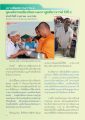
สถานการณ์การถวายถ้วยเปี่ยมปิลก 800 ชาม
เกาะติดสถานการณ์..
ดูงค์ธรรมหัถเส้นทางมหาปูชนียาจารย์ ปีที่ 2
ประจำวันที่ 3 มกราคม พ.ศ. 2556
เรียบเรียงจากรายการโรงเรียนอนุบาลฝันในฝันฉบับวิทยา
www.dmc.tv
รัตนพล ส.วรุพิน ถวายถ้วยเปี่ยมปิลก 800 ช
ในวันที่ 3 มกราคม พ.ศ. 2556 ทีมข่าวได้ติดตามสถานการณ์พระดุงคงพ้น ที่มหาวิทยาลัยปฐมธานี โดยรัตนพล ส.วรุพิน ได้ถวายถ้วยเปี่ยมปิลกจำนวน 800 ชาม เพื่อเป็นเจ้าภาพในการถวายอาหาร โดยเขาได้เริ่มงานตั้งแต่เช้า
42
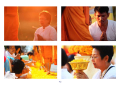
Here is the OCR result from the image:
(There is no visible text in the image to transcribe.)

32
There is no visible text in the image for OCR extraction. The image shows a night scene with fireworks and many small lights, likely candles, on the ground.
95
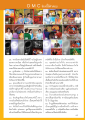
Exploring Spiritual Imagery and Meditation
1. (Images of Buddha, meditation, natural scenes, and traditional textiles)
2. (Images of women interacting, people at a temple, and group discussions)
3. (Black and white images of planets or moons,
This content presents a compilation of images symbolizing spirituality and meditation, encompassing depictions of the Buddha, natural settings, and traditional textiles. It features women engaging in
30
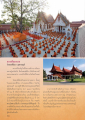
วัดสองพี่น้อง: สถานที่สำคัญในการออบวช
สถานที่ออบวช
วัดสองพี่น้อง จ.สุพรรณบุรี
สถานที่สำคัญในวิธีการสร้างบารมีของ
หลวงปู่แห่งถิ่นไป คือลองพี่น้อง ซึ่งเป็นสถานที่
ออบวชของท่าน และเป็นที่ที่ท่านเกิดในในเพศ
สมณะ
วัดสองพี่น้องเป็นพระอาราม
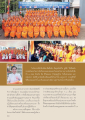
วัดสองพี่น้อง ตั้งอยู่ในจังหวัดสุพรรณบุรี เป็นสถานที่ที่หลวงปู่ทำการออบวชเมื่อปี พ.ศ. ๒๔๙๙ วัดนี้มีความสำคัญในกระบวนการสร้างบารมีของท่าน หลวงปู่ได้ตั้งจิตอธิษฐานบวชเพื่อพระศาสนาและมีเป้าหมายที่จะนำพาต
70
การรับปริญญาของเณร novices
The image contains the following textual content:
---
**Top Banner:**
The 126 Novices Graduation Ceremony
December 25, 2012 at RSUD Lampase, Banten, Indonesia
**Paragraph (in Thai):**
ในวันงานนี้
พิธีรับปริญญาสามเณรจัดขึ้นที่ RSUD Lampase ในบันเตน อินโดนีเซีย มีการแสดงโดยเณรที่มีความสุขที่ได้ร้องเพลงตะวันธรรมถึงสี่เพลง ส่วนหนึ่งคือ ชีวิตสมณะ และผ้าดูสุดท้าย งานนี้มีความสำคัญในการฟื้นฟูพระพุทธศ
21
Exploring Buddhist Manuscripts and Teachings
JDIRI
Contents
The Most Venerable Phrathepyanmahami (Luang Phaw Dhammajayo)
*Homily* I
Garry W. Trompf
Emeritus Professor in the History of Ideas
This text presents a collection of scholarly articles on Buddhist manuscripts and teachings, focusing on contributions from various experts. It includes studies on the Tipitaka Manuscripts of the Kham
29
Exploring the Origins of the Nong Pa Fa Cave Manuscripts
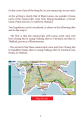
On the cover of one of the Nong Pa Fa Cave manuscript, we can read:
As the writing is clearly that of Dham Lanna, one wonders if some parts of the manuscripts come from Muang Nandaburi, a former name
This text examines the Nong Pa Fa Cave manuscripts, highlighting their writing style as Dham Lanna. It raises questions about their origins, specifically whether part of these manuscripts originate fr
43
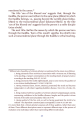
Understanding the Noble Discipleship in Buddhism
Vin.II.192, A.IV.186, 210, 213
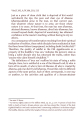
Just as a piece of clean cloth that is deprived of dirt would well-absorb the dye, the pure and clear eye of dhamma (dhammacakku) arose to the man, on that current seat
The text discusses the qualities of noble disciples in Buddhism, emphasizing the importance of clear perception of dhamma and the eradication of doubts and fetters. It describes the transformation exp
44
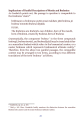
Qualities of a Stream-Attainer in Buddhism
mentioned in the canon.40
The title ‘son of the Blessed one’ suggests that, through the
Buddha, the person was (re)born to the same plane (bhūmi) to which
the Buddha belongs, i.e., passing beyond the
This text delves into the characteristics of a Stream-attainer, identified as a noble disciple who is reborn to a transcendental plane through the Buddha's teachings. Key qualities include association
47
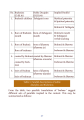
Implications of Parallel Descriptions of Monks and Brahmins
Implications of Parallel Descriptions of Monks and Brahmins
As Gombrich points out, the passage in question is comparable to the Brahmins’ claim:46
brahmanā va brahmuo putṭā orasā mukhato jāta brahma
The text delves into how Gombrich compares the descriptions of Brahmins and Monks, emphasizing the dual interpretations of the term 'brahma-' as both the masculine creator and the neuter ultimate real
48
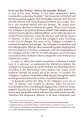
Brahmins and Noble Disciples: A Comparative Analysis
No. | Brahmins (D.III.81) | Noble Disciples (D.III.84) | Implied Parallel
---|------------------------|---------------------------|------------------------
1. | Brahma's children | Tathägata's sons |
The text presents a comparative analysis between Brahmins and Noble Disciples, highlighting their similarities in mythical and spiritual parental origins. It details how both are seen as offsprings of
50
Understanding the Connotation of Dhamma in Relation to Brahma
In the case that ‘brahma-’ refers to the masculine ‘Brahma’
In case of the term ‘brahma-’ in the three compounds50 being
translated as a masculine ‘Brahma,’51 the comparison of the first and
the third
In this text, the term 'brahma-' is analyzed in the context of its translation as the masculine 'Brahma.' It discusses how the comparison between the Tathāgata and the Brahma, the creator, illustrates
56
Understanding Brahmabhūta and the Path to Nibbāna
where all fetters are unrooted, or at least they signify the ‘best’ state.
The same may be said for the parallel of dhammacarĺa and brahmacarĺa. Although these two compounds are normally used in dif
The text discusses how 'brahmabhūta' refers to the state of having eradicated all defilements, allowing one to experience ultimate peace and happiness. It parallels 'dhammacarĺa' and 'brahmacarĺa' as
57
The Concept of Dhamma and Kāya in Buddhist Philosophy
On the whole, it appears that the terms dhamma and brahma constituting four designations of the Tathāgāta are used in the sense of the ‘highest.’ It is most likely that they refer to Nibbāna.
This i
This study examines the terms dhamma and brahma, suggesting that they refer to the highest aspect of Tathāgāta, likely Nibbāna. The term dhamma denotes transcendental realities, transcending the realm
73
Supramundane Paths and Fruits in Dhammakāya
supramundane paths and fruits. 113 The ‘four pairs’ are mentioned instead when particular paths and their corresponding fruits are collectively called under the same titles. Of the eight transcendenta
The text discusses the different transcendental levels of dhammakāya, highlighting the distinction between trainees and non-trainees. The first seven levels correspond to qualities of trainees, wherea
76
Understanding the Terms Kevala and Dhammakāya in Buddhist Texts
Generally, the term ‘kevala’ is translated either as ‘only’ or ‘entirely.’ It is observed that, whenever the term appears together with another word that conveys the meaning of ‘emanating,’ ‘illuminat
This text explores the interpretation of key Buddhist terms such as 'kevala', which denotes 'only' or 'entirely', particularly in contexts associated with illumination. The term 'dhammakāya', often li
82
Interpretations of Dhammakāya in Pali Commentaries
In addition to the above two commentators, Upasena and Buddhadatta141 are also Pali commentators who lived around the same times.142 Upasena agrees with Buddhagōsha in regard to his interpretations of
The text discusses the interpretations of the term 'dhammakāya' by various Pali commentators, focusing on Upasena and Buddhadatta, who align with Buddhagōsha, and their views on the Buddha's qualities
90
Buddhist Manuscripts from Sipsong Panna Region
Buddhist manuscripts from the Sipsong Panna region can be divided into four categories. The first category consists of the Dai Pāli Tripiṭaka and Tripiṭaka commentary (三藏琢) which is represented by fiv
Buddhist manuscripts from the Sipsong Panna region are categorized into four main groups: the Dai Pāli Tripiṭaka and Tripiṭaka commentary, frequently used Pāli Canon texts, Theravāda Buddhist literatu
91
Exploration of Theravāda Buddhist Manuscripts in Sipsong Panna
literature.9 It is notable that the Agama Sutras (阿含经) discovered in the Xishuangbanna region are incomplete. For example, the Hinayana Agama should have contained the Khuddaka Patha (小品), Dharma-phra
The Agama Sutras found in the Xishuangbanna region are notable for their incompleteness. The Hinayana Agama is expected to contain various texts that are partly missing. According to The Complete Coll